
Coinbase Review 2026: Fees, Security & What Beginners Should Know
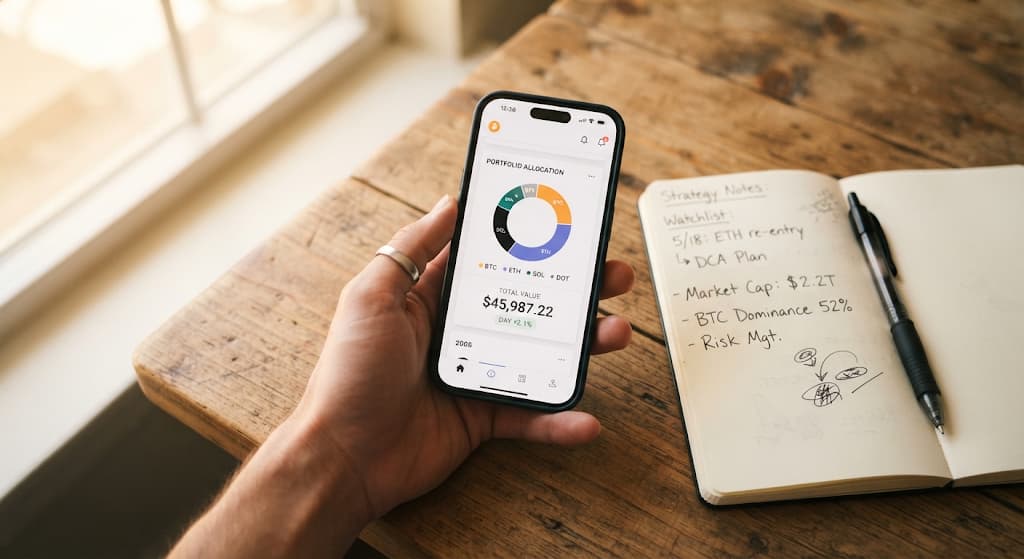
If you’ve ever typed "coin base," "coinbas," or even "conbase" into a search bar by accident, you’re not alone — Coinbase is one of the most mistyped names in finance, mostly because it’s also one of the most searched. For a huge share of people who have ever bought a fraction of Bitcoin, Coinbase was the front door. That’s not an accident of marketing; it’s the result of a deliberate decade-long bet on being the "safe," regulated, easy-to-use option in an industry that hasn’t always earned that reputation.
But "easy" and "cheap" are different promises, and Coinbase has historically delivered a lot more of the first than the second. Here’s what the platform actually offers in 2026, what it costs in practice, and what a serious 2025 security incident revealed about how the company handles a crisis.
What Coinbase Actually Is — and Isn’t
Coinbase is a publicly traded company — Coinbase Global, Inc., listed on Nasdaq under the ticker COIN since its direct listing in April 2021. That’s a meaningful detail, because it means Coinbase has to file quarterly disclosures, report material incidents to the SEC, and answer to shareholders in a way that many private exchanges don’t. When something goes wrong at Coinbase, there’s usually a public paper trail — which is exactly how we know the details of the 2025 breach discussed below.
The core product is still what most people think of: a beginner-friendly app for buying, selling, and holding crypto. But the ecosystem around it has grown considerably:
- Coinbase Advanced Trade — the order-book interface, formerly branded Coinbase Pro, built for lower fees and active trading
- Coinbase Wallet — a separate self-custody wallet for DeFi and NFTs, distinct from the exchange account and a frequent source of confusion for first-time users
- Coinbase One — a tiered subscription ($4.99/month at the base level) that waives trading fees up to a monthly volume threshold
- Base — Coinbase’s own Ethereum layer-2 network, used by developers building crypto-native apps
- Institutional custody — regulated custody services for larger accounts and funds
The Fee Question Nobody Gets a Straight Answer To
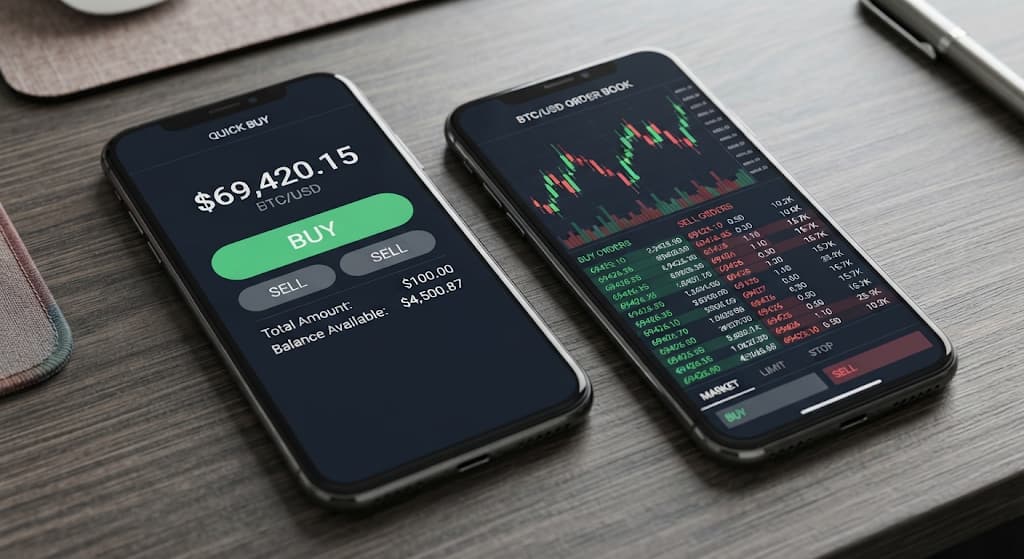
Search "coinbase crypto fees" and you’ll find a genuinely confusing picture, and that confusion is the single most consistent complaint across independent reviews. The standard app doesn’t charge one clean number — it layers a spread (roughly 0.5%) on top of a variable "Coinbase Fee" that shifts with order size, payment method, and market volatility. On a small card-funded purchase, the effective cost can land anywhere from 1% to as high as 3-4%.
Coinbase Advanced Trade is a different story entirely, and it’s where the platform becomes genuinely competitive.
| Interface | Typical effective cost | Best for |
|---|---|---|
| Coinbase (standard app) | ~1–2%+ depending on payment method and order size | First-time buyers, small one-off purchases |
| Coinbase Advanced Trade | 0.40% maker / 0.60% taker, decreasing with volume | Regular or active traders |
| Coinbase One (Basic) | $4.99/month, $0 fees up to $500/month in trades | Small recurring buyers |
| Coinbase One (Preferred) | Higher monthly fee, $0 fees up to $10,000/month | Mid-volume traders who dislike order books |
The practical takeaway, repeated almost verbatim across review sites: if you only ever tap the big "Buy" button on the main app, you are paying a real premium for that convenience. Moving to Advanced Trade — which is free to access, just less friendly for a first-timer — cuts costs by roughly two-thirds to three-quarters on the same trade.
The May 2025 Breach: What Actually Happened
Any honest review of Coinbase in 2026 has to address this directly, because it’s the single biggest trust event in the company’s recent history — and because the details matter more than the headline.
This wasn’t a hack in the traditional sense of someone breaking through a firewall. According to Coinbase’s own SEC filing, a group of overseas customer-support contractors were bribed to pull customer data from internal systems they already had legitimate access to as part of their jobs. The campaign reportedly began in December 2024 and wasn’t caught until Coinbase’s security monitoring flagged the unusual access months later. On May 11, 2025, an unknown party emailed Coinbase demanding $20 million not to leak what they’d collected. Coinbase refused to pay.
What was taken:
- Names, addresses, phone numbers, and emails
- Partial Social Security numbers and masked bank account details
- Government-ID images used for identity verification
- Account balance snapshots and transaction history
- Some internal support documentation
What wasn’t taken, according to the company and confirmed in its filings: no passwords, and no private keys — meaning the breach couldn’t be used to directly drain anyone’s crypto holdings. Roughly 69,000 accounts were affected, a small fraction of Coinbase’s total user base, though the depth of personal detail exposed made it serious regardless of the percentage.
To its credit, Coinbase’s response is now a fairly widely cited case study in how to handle an insider-threat incident: it fired and referred the implicated contractors for criminal prosecution, publicly disclosed the incident within days rather than sitting on it, offered a $20 million reward for information on the attackers, and committed to reimbursing customers who lost funds to resulting phishing or social-engineering attempts. That doesn’t erase the breach, but it’s a materially different outcome than companies that discover a problem and go quiet for months.
So Who Is Coinbase Actually Good For?
Strip away the marketing on both sides — the "Coinbase is overpriced" crowd and the "Coinbase is the only safe option" crowd — and the honest answer is: it depends on what you’re optimizing for.
- New to crypto and buying small amounts occasionally? The standard app’s fees sting less in absolute dollar terms, and the UX genuinely is built for first-timers.
- Trading regularly or in larger amounts? Advanced Trade (or a Coinbase One tier) closes most of the fee gap with competitors, and skipping it is leaving money on the table.
- Prioritizing regulatory transparency above all else? Being a public, SEC-reporting company is a real differentiator — you’ll know about problems because Coinbase is legally required to disclose them.
- Chasing the lowest possible fee, full stop? Even on Advanced Trade, Coinbase tends to sit a notch above exchanges like Kraken at comparable volume tiers, so cost-focused traders often split activity across platforms.
Questions People Actually Type Into Google
Worth Remembering Before You Tap "Buy"
Coinbase didn’t become the industry’s default on-ramp by being the cheapest — it got there by being, for most of its history, the exchange people trusted not to disappear overnight or lose their keys. The 2025 breach complicated that story without erasing it; the company’s handling of the aftermath mattered as much as the incident itself. If you’re deciding whether to use it, the real question isn’t "is Coinbase good or bad" — it’s whether you’ve bothered to open Advanced Trade at least once, because that single click is where most of the platform’s reputation for high fees quietly stops being true. For more breakdowns like this one, the author’s full coverage of exchange mechanics and crypto infrastructure is linked here.
Related guides
 Gemini Exchange Review 2026: Fees, Coins & Is Security Worth the Cost?What Gemini actually offers in 2026 — real fees, its supported coin list, its…
 What Is Tongue Weight?The tongue weight is one of the most important limits to consider when towing…
 What Is GVWR? Everything You Need To KnowAll vehicles have something in common and it doesn't matter if you are driving…
 BloFin Exchange Review 2026: Fees, No-KYC Limits & Futures TradingWhat BloFin actually offers in 2026 — real fee numbers, how its no-KYC withdrawal…
 Toyota Highlander Towing CapacitiesThe Toyota Highlander is another one of those big SUVs that are very popular…
 Dodge Ram 3500 Towing CapacitiesThe Dodge Ram 3500 is a powerhouse when it comes to towing capacity and…