
Rent a Car and Pay With Bitcoin: Rentals, Insurance, and EV Charging
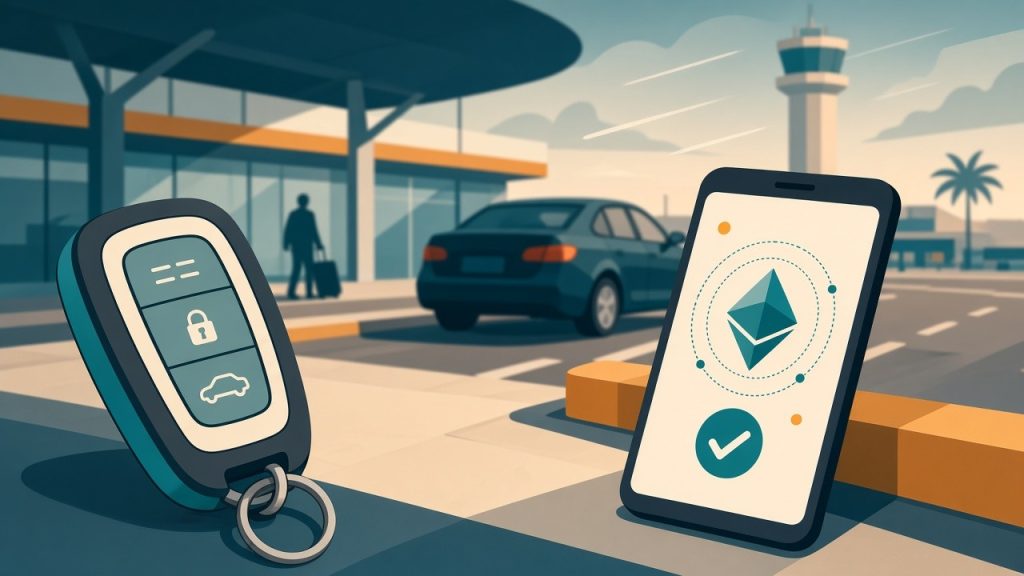
Car rental counters still run on credit cards, corporate billing codes, and hold authorizations on your bank account. Bitcoin has not replaced those systems at airport agencies — but a narrow set of alternatives lets crypto holders rent wheels without converting every satoshi first. Insurance carriers and EV charging networks show similar patchwork adoption.
This guide explains where Bitcoin fits in the rental world today, how holds and deposits differ from purchase payments, and what related services — auto insurance and public charging — accept digital assets in limited cases.
Can You Rent a Car and Pay With Bitcoin?
Major U.S. rental brands — Enterprise, Hertz, Avis, National, Budget, and others — do not accept Bitcoin at standard airport or neighborhood counters. Their systems expect card networks that support authorization holds, chargebacks, and fleet billing integrations. Crypto’s irreversibility conflicts with how rental companies recover fuel shortfalls, toll violations, and damage claims weeks after you return the keys.
That corporate reality leaves three practical paths for travelers who prefer paying in digital coin.
Peer-to-peer car sharing with crypto-friendly hosts
Some independent hosts on car-sharing platforms experiment with alternative payment, including crypto, for multi-day rentals outside traditional fleet programs. Terms vary by host and platform policy. Read cancellation rules, insurance coverage layers, and mileage limits before you send coin.
Crypto travel and concierge services
Specialty booking services aggregate rental inventory and invoice clients in cryptocurrency, often targeting international travelers or corporate treasuries. You pay the concierge in BTC or stablecoins; they settle the rental company in fiat. Fees cover conversion risk and support.
Convert crypto, rent with a card
The reliable mainstream approach: exchange Bitcoin for dollars, load a debit or credit card, and book through any major agency. You keep chargeback protections on disputed damage charges and satisfy the hold requirements rental counters enforce at pickup.
Why Rental Companies Prefer Cards
- Authorization holds: Rentals pre-authorize $200–$500 or more beyond the quoted rate; card issuers handle this instantly.
- Post-return charges: Tolls, scratches, and refueling fees post days later; card networks allow incremental captures.
- Fraud prevention: Chargebacks give agencies recourse; blockchain transfers do not.
- Corporate accounts: Fleet contracts integrate with ERP systems built for invoicing in national currency.
Until rental ERP systems natively reconcile on-chain payments with damage billing workflows, widespread Bitcoin acceptance at the counter remains unlikely.
Renting a Tow Vehicle or Truck
Travelers who need a tow-capable rental — pickup, SUV with hitch, or cargo van — face the same payment constraints plus equipment verification. Not every location rents hitch-equipped trucks, and tow package availability varies by market.
If you rent to pull a small trailer on vacation:
- Confirm the location offers a hitch receiver and wiring if you need trailer lights.
- Ask whether the rental agreement permits towing; many standard contracts prohibit it.
- Compare the rental tow rating to your trailer weight using the same discipline as buying — see what a towing package includes and model capacity references like Ford F-150 towing capacities for context on what half-ton ratings mean.
- Verify your personal auto policy or the rental company’s supplemental coverage extends to trailer liability.
Insurance Companies and Cryptocurrency
Auto insurers operate on premium billing cycles — monthly ACH, card autopay, or employer payroll deduction. A handful of insurtech startups and regional carriers have tested crypto premium payment in pilot markets, usually through a processor that converts coin to dollars before crediting the policy.
What to expect
- Large national carriers (State Farm, GEICO, Progressive, Allstate, USAA) bill overwhelmingly in fiat; crypto is not a standard option on their consumer portals.
- Specialty insurers serving crypto-native clients may accept Bitcoin for annual premium lumps, often for high-net-worth policies or commercial lines.
- Policy coverage, limits, and claims handling are unrelated to how you pay — a crypto-settled premium does not change adjuster process after an accident.
- Keep receipts showing dollar equivalent at payment time for tax and audit trails if your insurer offers crypto settlement.
Paying insurance in coin does not replace the need for adequate liability limits when you tow. Discuss trailer and rental car coverage endorsements with your agent regardless of payment method.
EV Charging Networks That Accept Crypto
Electric vehicle road trips add charging stops to the travel budget. Most public networks — ChargePoint, Electrify America, EVgo, Tesla Supercharging for non-Tesla adapters — bill through apps linked to cards or memberships. Direct Bitcoin payment at the charger is rare.
Indirect crypto options for charging
- Crypto debit cards: Spend converted balance at any merchant that accepts Visa or Mastercard, including charging app wallet top-ups.
- Platform credits: Some mobility apps let you fund an account balance; third-party gift marketplaces occasionally sell credits purchased with crypto indirectly.
- Fleet and commercial accounts: Businesses holding crypto may convert treasury assets quarterly to pay utility-style charging invoices.
Home charging remains the simplest path for EV owners who stack coins — pay your utility bill through traditional means or a crypto-linked card after off-ramping as needed.
Practical Tips for Crypto Travelers
- Carry a backup card even if a concierge booked your rental — counters may reject damaged or non-chip cards.
- Pre-fund a stablecoin or low-volatility balance if you use a crypto debit product to avoid exchange slippage mid-trip.
- Document wallet transfers for concierge rentals the same way you would for a vehicle purchase.
- Read the rental contract’s damage and towing clauses before driving off — crypto payment does not waive your liability.
Looking Ahead
Rental, insurance, and charging infrastructure move slowly compared to crypto markets. Stablecoin settlement, improved identity verification, and smart-contract escrows for damage deposits could widen options over time. For now, assume conversion plus traditional payment for stress-free travel.
Summary
You generally cannot walk up to a major rental counter and pay with Bitcoin today. Peer-to-peer hosts, concierge services, and convert-then-pay strategies fill the gap. Auto insurers and public charging networks mirror the same pattern — limited crypto pilots, fiat dominance at scale.
Whether you rent for a weekend or tow on vacation, match equipment to your load and keep insurance current. HaulChart publishes towing references for buyers and haulers; for broader automotive payment topics, see our crypto purchase guides and work from Marcus Hale.
Related guides
 Buy a Used Car With Bitcoin: Escrow, Dealers, and Private SalesUsed cars account for most vehicle sales in the United States, and they also…
 What Is Tongue Weight?The tongue weight is one of the most important limits to consider when towing…
 What Is GVWR? Everything You Need To KnowAll vehicles have something in common and it doesn't matter if you are driving…
 Buy a Car With Crypto: Dealerships, Process, Risks, and Tax NotesPaying for a vehicle with Bitcoin or another cryptocurrency is no longer a novelty…
 2008 Honda Pilot Towing CapacitiesThe 2008 Honda Pilots had similar towing capacities to other model years, mainly because…
 2021 & 2020 Jeep Gladiator Towing Capacities Resource!The Jeep Gladiator is a newer vehicle with a very unique design concept, combining…