
Grovex Exchange Review 2026: Fees, Red Flags & What to Verify First

Every so often a review turns into less of a feature rundown and more of a fact-checking exercise. Grovex, a smaller Australian-registered exchange that’s been expanding its reach since 2022, is one of those cases. Dig into its publicly available fee information across a handful of sources and you’ll find numbers that don’t match each other — not by a rounding error, but by orders of magnitude. That’s worth sorting through properly before anyone moves real funds onto the platform.
What Grovex Actually Is
Grovex is a centralized, spot-only cryptocurrency exchange registered in Australia and listed with AUSTRAC, the country’s financial intelligence and anti-money-laundering regulator. It’s a relatively young platform, operational since 2022, offering several hundred coins depending on which tracker you check — CoinGecko has listed it with 354 coins and 388 trading pairs in one snapshot, while other sources describe closer to 130 pairs and ten supported blockchain networks. Unlike most of its mid-sized competitors, Grovex doesn’t offer derivatives, margin trading, or yield products — spot trading is the entire product. For 2026, that’s an unusually narrow lineup, and worth knowing going in if you’re expecting the fuller suite most exchanges this size now provide.
The Fee Numbers Genuinely Don’t Line Up
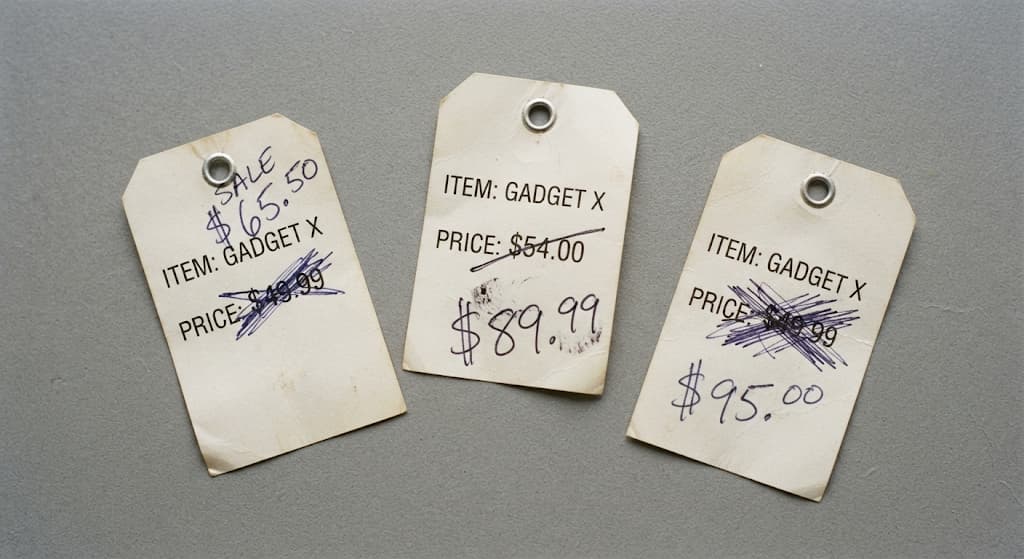
Here’s where things get strange. Grovex’s own CoinMarketCap listing and several affiliate review sites describe the platform’s headline fee as "the lowest trading fees in the industry, pegged at just 0.001%." A different snapshot of the same CoinMarketCap-style data lists the figure as 0.1% instead — a hundred-fold difference. CoinGecko’s own exchange page states a flat 0.1% for all trades. A more recent independent review, meanwhile, describes a tiered structure: a 0.1% base rate that drops to 0% maker fees at $50,000 in 30-day volume and 0.001% taker fees at $1,000,000 in monthly volume — which would explain where the ultra-low "0.001%" figure comes from, except that number only applies to a narrow slice of very high-volume traders, not to the typical user the marketing copy seems to be addressing.
Several of the glowing reviews circulating about Grovex also use nearly identical phrasing — the same "high-speed transactions and low fees" language, often word for word, across sites that are ostensibly independent. That pattern is a reasonable signal that at least some of what’s published about Grovex online is syndicated promotional content rather than hands-on testing, which makes it harder to take any single source’s fee claim at face value without checking the platform’s live fee schedule yourself.
The No-KYC Threshold, and What It Doesn’t Cover
Grovex markets a privacy-oriented, no-KYC policy for crypto-to-crypto trading up to a cumulative $10,000 USD in deposits or withdrawals. Cross that threshold, or touch fiat (AUD) on or off-ramps at all, and verification becomes mandatory regardless of amount — Grovex’s own risk-based framework under AUSTRAC also reserves the right to request ID at lower thresholds if an account’s activity looks unusual. That’s a fairly standard structure for a regulated exchange offering a limited no-KYC tier, broadly comparable to what BloFin or MEXC offer, just with a noticeably lower ceiling before verification kicks in.
A Pattern Worth Taking Seriously
The detail that should weigh most heavily in anyone’s decision here isn’t the fee confusion — it’s a recurring complaint pattern on Grovex’s Trustpilot page describing frozen accounts, specifically affecting traders who had been running profitable arbitrage strategies on the platform. One independent review that dug into this directly summarized Grovex as "a real, AUSTRAC-registered Australian cryptocurrency exchange with a publicly named team, a HackenProof bug bounty program, and roughly three years of operation without a recorded breach," while also flagging it as "a use-with-caution exchange" specifically because of that account-freeze pattern. Both things can be true: a legitimately registered, un-hacked exchange can still have a risk-control system that disproportionately flags its most successful traders — and if your trading strategy depends on consistently extracting profit from price inefficiencies, that’s exactly the kind of account behavior some platforms’ automated systems are tuned to interrupt.
Separately, at least one data aggregator has reported Grovex’s exchange reserves at a strikingly small figure — a few thousand dollars at the snapshot it recorded, which is either a data-collection quirk or a genuine reflection of a very thin balance sheet relative to a platform claiming hundreds of millions in reported daily volume elsewhere. That gap alone is reason enough to check Grovex’s current reserve and volume figures directly on its own site, or on a tracker you trust, rather than relying on any cached number — including the ones in this article, given how quickly a smaller exchange’s numbers can shift.
What This Actually Means Before You Sign Up
None of this adds up to a verdict that Grovex is fraudulent — it holds real Australian regulatory registration, publishes a named team, and runs a bug bounty program, all of which are genuine trust signals that plenty of scam operations skip entirely. But the combination of contradictory fee disclosures circulating under its own name, a cluster of complaints about frozen accounts hitting its more active traders, and reserve figures that don’t obviously square with its claimed volume adds up to a platform that deserves more homework than a quick skim of its marketing page before you move meaningful funds there. Pull the current fee schedule directly from Grovex’s own help center, read the Trustpilot complaints yourself rather than taking a summary’s word for it, and start with an amount you’d be comfortable testing withdrawal speed and support responsiveness on before committing anything larger.
Related guides
 Toobit Exchange Review 2026: Fees, KYC Limits & Withdrawal ComplaintsToobit won "Best New Exchange" and signed a LaLiga sponsorship. Here's what its fees,…
 What Is Tongue Weight?The tongue weight is one of the most important limits to consider when towing…
 What Is GVWR? Everything You Need To KnowAll vehicles have something in common and it doesn't matter if you are driving…
 Ford Category PageTrucks: Here's a list of all current articles I have on my website about…
 2021-2007 Lexus RX 350/350L Towing Capacities ResourceLexus is known for making luxury vehicles, and the RX 350's and RX 350L's…
 (2022-2000) Ford Ranger Towing Capacity With Charts!The smaller Ford Rangers are a very popular truck, but they were never made to…