
Korea’s First Crypto Exchange Has Two Buyers Circling It This Year

Korbit holds a genuine claim to crypto history: launched in July 2013, it was South Korea’s first Bitcoin exchange, operating years before Upbit or Bithumb existed. In 2026, that pioneer is the subject of not one but two separate acquisition conversations reported within months of each other — first Bybit reportedly exploring a takeover, then Mirae Asset Consulting signing a memorandum of understanding with Korbit’s major shareholders for a deal valued between roughly $70 and $100 million. Neither deal has been formally confirmed by the companies involved as of this writing, but the fact that two very different kinds of buyers — a global crypto-native exchange and a traditional Korean asset manager — both circled the same small, historic platform in the same stretch of time says something worth examining about where Korbit actually stands today.
How Korbit Ended Up Owned by a Video Game Company
Korbit wasn’t built or acquired by a typical crypto industry player. In September 2017, Nexon — one of South Korea’s largest video game developers — had its holding company NXC acquire a majority stake in Korbit for roughly $80 million, making a gaming conglomerate, not a financial institution, the exchange’s controlling owner. NXC went on to also buy the European exchange Bitstamp the following year, building out a quiet crypto portfolio alongside its gaming business.
In December 2021, SK Square — an investment arm spun off from telecom giant SK Telecom — bought in as the second-largest shareholder, investing roughly $75 million for what was initially reported as a 35% stake (later cited closer to 31.5% after subsequent restructuring under SK Planet). That gave Korbit a genuinely unusual ownership structure for a crypto exchange: majority-controlled by a gaming company, with a telecom-linked investment arm as the other major stakeholder, rather than the venture-capital-and-founder structures typical of exchanges like Kraken or Coinbase.
A Pioneer With a Shrinking Share of the Market
Here’s the part that makes the current acquisition interest make sense. Despite its founding-era pedigree and its status as one of only four Korean exchanges fully licensed for won-to-crypto real-name trading — the same regulatory structure that keeps foreign users off Korean platforms entirely, as it does for Coinone — Korbit’s actual market share has shrunk to a sliver of the country’s trading activity. One recent estimate put Korbit’s daily trading volume at roughly $5.75 million against a combined $1.21 billion across South Korea’s six major exchanges — well under 1% of total activity, a steep fall for a platform once ranked third-largest in the country as recently as 2021.
That combination — a scarce, hard-to-obtain Korean exchange license, genuine brand history, and a tiny fraction of actual trading volume — is exactly the profile that makes a company an acquisition target rather than a growth story on its own. For a buyer like Bybit, acquiring Korbit would reportedly offer a faster route into Korea’s tightly regulated won-trading market than building a license from scratch. For Mirae Asset, a traditional financial group, it would offer an established regulatory foothold into crypto without the years-long licensing process South Korea has built around real-name verified exchanges.

What Trading on Korbit Actually Costs
Korbit’s fee structure is straightforward and sits in a reasonable range by Korean exchange standards.
| Fee type | Rate |
|---|---|
| Base maker fee | 0.08% |
| Base taker fee | 0.20% |
| Highest VIP tier (maker) | As low as 0% at high 30-day volume |
| Highest VIP tier (taker) | As low as 0.015% |
| Minimum deposit | KRW 10,000 (roughly $7–8) |
| Bitcoin withdrawal | Flat network fee, around 0.00001 BTC |
The platform supports a notably smaller coin selection than its larger domestic rivals — various counts put it between roughly 40 and 195 tradable assets depending on the source and date, modest next to Bithumb’s several hundred listings, reflecting Korbit’s more conservative, longer-established approach to adding new assets.
Who Korbit Actually Works For
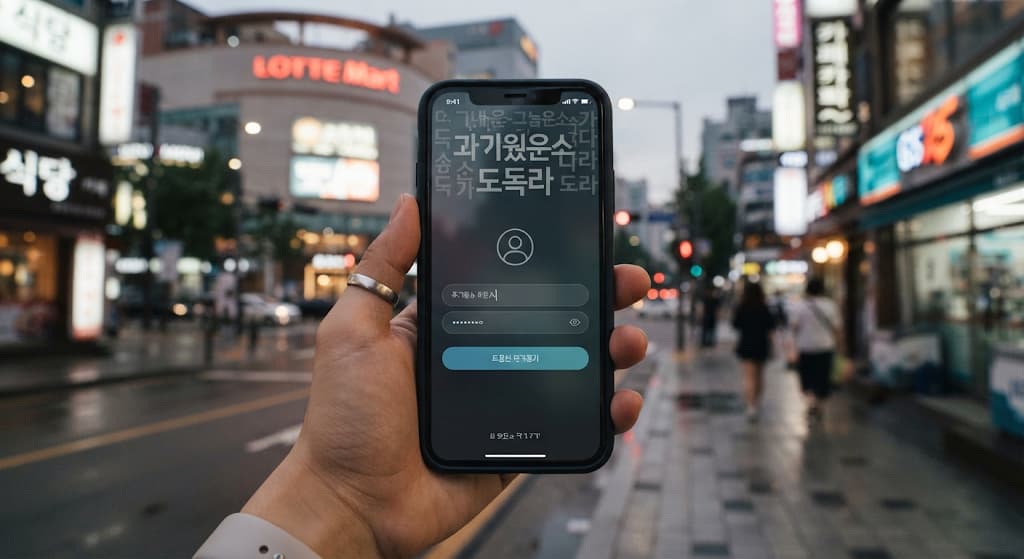
Mandatory KYC applies to every Korbit user — ID verification plus a matching real-name Korean bank account, the same structural framework that makes the platform inaccessible to foreign users regardless of VPN or workaround, exactly as with Coinone. One detail worth flagging for anyone searching for Korbit from outside Korea: the platform’s interface has historically lacked a full English-language version, a small but real signal of how squarely domestic its target user base remains, even as international headlines about its ownership circulate well beyond Korea’s borders.
What to Actually Watch For
Neither the Bybit nor Mirae Asset talks had resulted in a confirmed, closed transaction as of the most recent reporting, and acquisition rumors in the exchange space — especially ones involving Korean regulatory review, antitrust checks, and multi-party shareholder negotiations — have a well-documented habit of stalling or falling apart before signing. What’s clear regardless of which deal, if either, eventually closes: Korbit’s value right now lies almost entirely in its license and its history rather than its current trading volume, and existing users have real reason to watch for an ownership announcement that could reshape the platform’s fee structure, product roadmap, or even its operating identity with fairly little warning. For a pioneer that’s been quietly losing ground to younger, larger domestic rivals for years, new ownership might be less a threat than the clearest path back to relevance it’s had in a while.
Ownership stories like this are a recurring thread in Wes Ibarra’s exchange coverage.
Related guides
 What Is Tongue Weight?The tongue weight is one of the most important limits to consider when towing…
 What Is GVWR? Everything You Need To KnowAll vehicles have something in common and it doesn't matter if you are driving…
 2006 Hyundai Santa Fe Towing Capacities (With Charts)The 2006 Hyundai Santa Fe was the larger SUV that was offered for 2006…
 2005 Ford F-150 Towing Capacities (With Charts)The 2005 Ford F150 did not have the towing capacity that some of the…
 2000-2020 Nissan Pathfinder Towing Capacity Resource GuideThe Nissan Pathfinder is another typical SUV, but when I was researching the towing…
 Dubai Just Became the First Regulator to Formally Ban XT.comXT.com offers 1,000+ coins and $200,000 daily no-KYC withdrawals. In 2026, Dubai's VARA flagged…