
OKX Exchange Review 2026: Fees, US Access & What Changed From OKEx
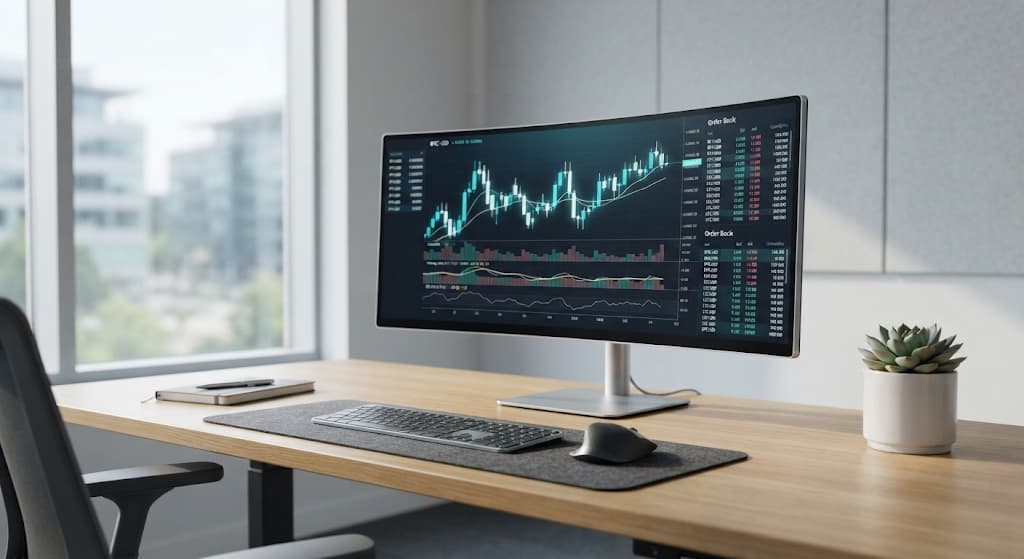
If you’ve ever searched "okex биржа" or wondered whether okex and okx are even the same company, the short answer is yes — and the rename is more than cosmetic trivia. OKX dropped the "E" from OKEx back in January 2022, and the platform underneath has changed substantially since, particularly when it comes to one question that trips up more people than almost any other: can you actually trade on it from the United States?
The Name Change, Briefly
OKX traces back to 2013 as Okcoin, founded by Star Xu, before relaunching as OKEx in 2017 and then rebranding to OKX in 2022. None of that history is just branding noise — it matters for anyone cross-referencing older reviews or forum posts that still use "OKEx," since those pieces are often describing fee structures, products, or regulatory standing that are now several years out of date. If you land on an old article calling it "ok ex" or "okay x," you’re reading about the same company, just under its earlier name.
OKX vs. OKX US: Two Platforms, One Brand
This is the detail that causes the most confusion, and it closely mirrors the split you’ll see with Binance and Binance.US.
OKX.com — the global platform — is not available to US residents. It offers the full product suite: deep spot and derivatives markets, a Web3 wallet, trading bots, copy trading, and hundreds of listed assets, all under international licensing that doesn’t extend to US regulatory frameworks.
OKX US, a separate, newly launched entity, began operating in April 2025 specifically to give US residents a regulated entry point. It’s a deliberately narrower product — spot trading and a simple-buy broker flow, without the derivatives, margin tools, or full wallet ecosystem of the global site — initially available in 46 states and Washington, D.C., with coverage expanding since launch.
| OKX (global) | OKX US | |
|---|---|---|
| Spot trading | Yes, extensive | Yes, narrower asset list |
| Derivatives/futures | Yes, deep liquidity | No |
| Web3 wallet | Yes | No |
| Spot fees (standard tier) | ~0.08% maker / 0.10% taker | ~0.20% maker / 0.35% taker |
| US residents | Not eligible | Eligible (most states) |
If you’ve seen a claim stating flatly "OKX isn’t available in the US," it’s either outdated or referring specifically to the global platform — both can be true at once, which is exactly why the two entities are worth keeping straight before you sign up for the wrong one.
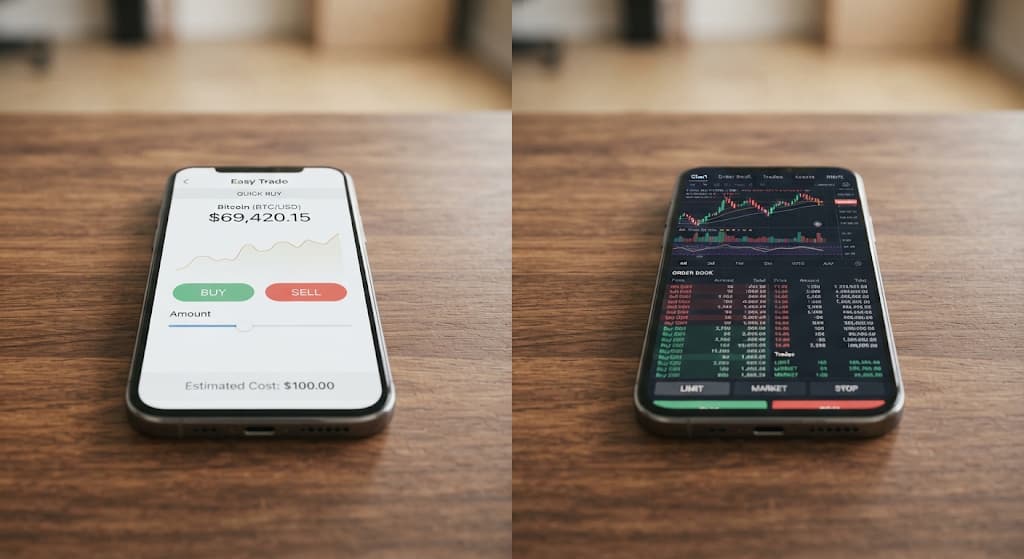
What Trading on OKX Actually Costs
On the global platform, OKX consistently ranks among the cheaper major exchanges, a fact that shows up across nearly every independent review regardless of when it was published.
- Spot trading: roughly 0.08% maker / 0.10% taker at the standard tier
- Derivatives/perpetual swaps: roughly 0.02% maker / 0.05% taker, dropping further at higher VIP tiers — as low as 0.03% maker for high-volume traders
- Crypto deposits and withdrawals: no platform fee beyond standard blockchain network costs
- Fee discounts: available through OKB, OKX’s native token, similar to how BNB or MX function on other exchanges
OKX US runs a different, higher fee schedule reflecting its narrower, more compliance-heavy structure — standard entry fees around 0.20% maker and 0.35% taker, with select stablecoin pairs (like USDC-USDT) offered at zero or near-zero fees as a deliberate on-ramp incentive.
Is OKX Publicly Traded? Can You Buy "OKX Stock"?
No — OKX remains a privately held company. There’s no public ticker, and "OKX stock" isn’t something you can currently purchase on any exchange. What is public is its valuation trajectory: in March 2026, OKX’s valuation reportedly reached roughly $25 billion after an investment tied to NYSE’s parent company, a notable vote of confidence from traditional finance into a crypto-native platform. That’s a funding-round valuation, not a market cap — the same distinction worth applying to every private exchange, since the two numbers get used interchangeably far more often than they should be.
Regulatory History Worth Knowing
OKX’s global growth hasn’t come without friction. The company settled with US authorities in 2025 over past unlicensed activity predating its current US push, part of a broader industry pattern of exchanges cleaning up earlier compliance gaps before seeking formal regulatory footing — Binance’s 2023 settlement followed a similar arc. In Europe, OKX has been working to align with MiCA, the EU’s comprehensive crypto regulatory framework, as part of a broader push toward regional compliance rather than operating purely offshore.
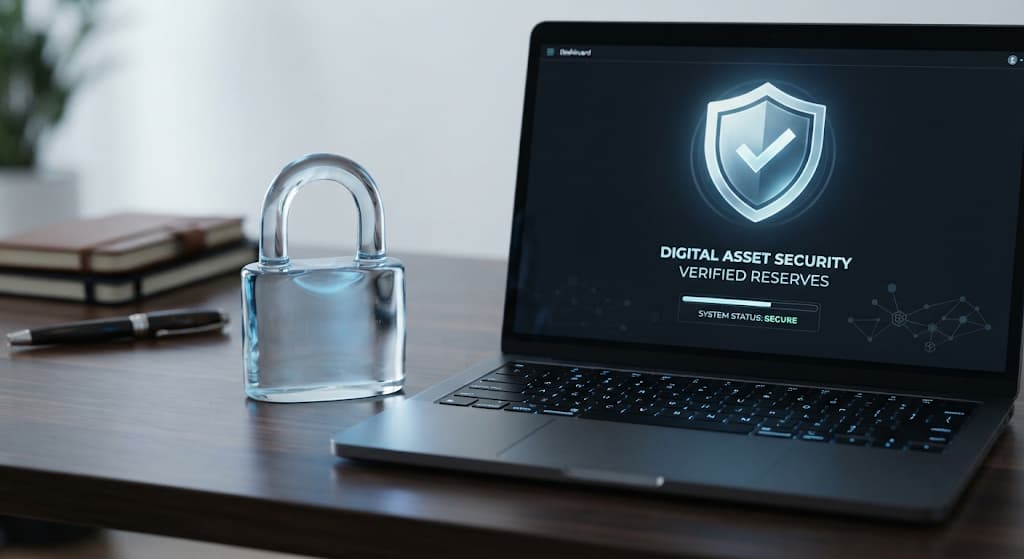
On the product side, OKX continues to publish monthly proof-of-reserves reports, and by trading volume it ranks among the largest derivatives exchanges globally, with Q1 2026 derivatives volume reported in the trillions of dollars — a scale that puts it in direct competition with Binance and Bybit for active, high-frequency traders rather than the more beginner-oriented crowd that Coinbase courts.
Questions Worth Clearing Up
The Short Version If You’re Deciding
OKX earns its reputation among active traders honestly: low fees, deep derivatives liquidity, and a genuinely capable Web3 wallet make it one of the more serious tools in the space, provided you’re trading from outside the US or have specifically onboarded through OKX US and understand that entity’s narrower product set. The regulatory cleanup it’s gone through, much like its peers, is a fair thing to weigh rather than ignore — not a disqualifier on its own, but a reminder that "largest" and "oldest" rarely mean "spotless," in this industry or any other.
Related guides
 Gemini Exchange Review 2026: Fees, Coins & Is Security Worth the Cost?What Gemini actually offers in 2026 — real fees, its supported coin list, its…
 What Is Tongue Weight?The tongue weight is one of the most important limits to consider when towing…
 What Is GVWR? Everything You Need To KnowAll vehicles have something in common and it doesn't matter if you are driving…
 2016 F-150 Towing Capacities (With Charts)The 2016 F-150 had four different engine options to choose from, which affected the…
 2015 F-150 Towing Capacities Resource GuideThe 2015 F-150 is a very capable truck and has a phenomenal towing capacity,…Which Car Insurance Companies Accept Crypto Payments in 2026Looking for car insurance companies that accept crypto payments? Here's which insurers actually let…