
MEXC Exchange Review 2026: Fees, KYC Rules & Is It Safe?

Search "mxc exchange" or "mexi crypto exchange" and you’ll eventually land in the same place: MEXC, a platform that’s built a loyal following among altcoin traders and a reputation — partly earned, partly outdated — as the place you can trade without handing over an ID. That reputation is worth examining closely, because the honest answer in 2026 is more complicated than either "totally anonymous" or "fully regulated," and the gap between those two claims is exactly where new users tend to get burned.
A Quick Name History, Because the Confusion Is Real
If you’ve seen the exchange referred to as MXC, that’s not a typo — it’s the platform’s original brand. MXC rebranded to MEXC Global in 2021, which is why older threads, old links, and muscle-memory searches still reference "mxc trading" or "mxc crypto exchange" even though the current product, website, and app all operate under the MEXC name. Founded in 2018, the exchange has grown into one of the largest platforms by altcoin count, commonly cited at somewhere between 2,700 and over 4,000 tradable assets depending on when the count was taken — a number that shifts constantly given how aggressively MEXC adds new token listings.
The No-KYC Question: What’s Actually True Right Now
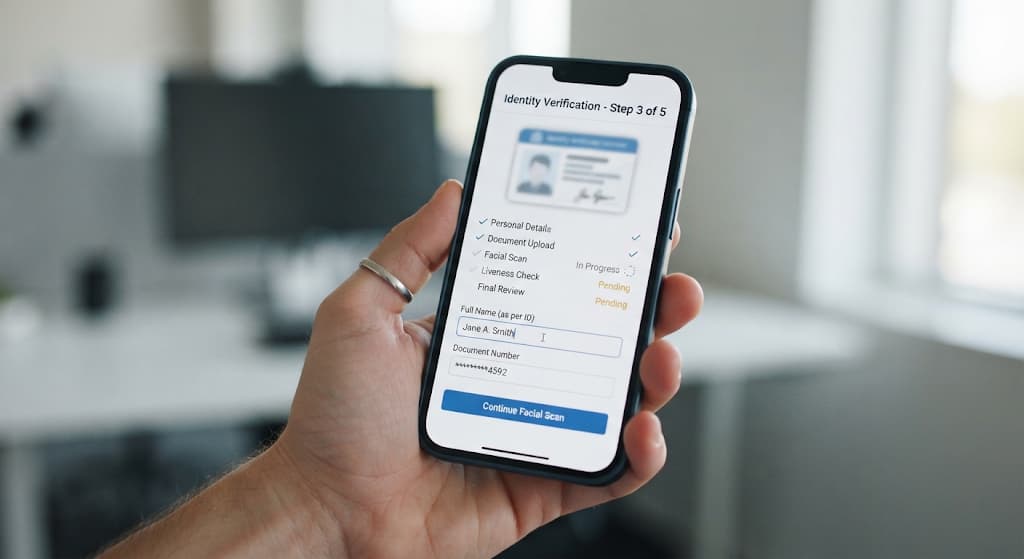
Here’s where independent reviews genuinely disagree with each other, and it’s worth sitting with that disagreement rather than papering over it. Several review sites published in 2026 still describe MEXC as a "zero-fee, no-KYC" exchange, pointing to the fact that basic spot trading has historically been accessible without identity verification, with daily withdrawal caps instead of a hard verification wall. Other, more recently updated reviews report that MEXC’s KYC requirements tightened significantly in 2026, tied to industry-wide CARF (Crypto-Asset Reporting Framework) compliance rules that are reshaping disclosure requirements across exchanges globally, not just at MEXC.
The practical reality that seems to reconcile both claims: unverified accounts can still open a MEXC account and place basic spot trades, but verification is required well before you’d want it to be — for withdrawals above certain thresholds (often cited around 1,000 USDT or up to a daily BTC cap depending on tier), for fiat on-ramps, for participation in token launches, and increasingly, for staying within new tax-reporting compliance frameworks. Several users have reported discovering this the inconvenient way: depositing funds, trading successfully, and then hitting a withdrawal wall that forces verification at the exact moment they want their money out.
MEXC does not hold licenses in most major Western jurisdictions, including the US and UK, which is a separate issue from the KYC question but related to it — unlicensed offshore exchanges are generally the ones most likely to rely on self-attested geography rather than hard verification at signup. For US-based readers specifically: accessing an exchange that isn’t licensed to serve US residents carries real regulatory and consumer-protection risk regardless of whether the platform’s front door happens to be open, and that risk sits with the account holder, not the exchange.
What Trading on MEXC Actually Costs
On pure fee numbers, MEXC is genuinely hard to beat, and this is the one claim that holds up consistently across nearly every review of the platform.
| Market | Maker fee | Taker fee |
|---|---|---|
| Spot trading | 0.00% | 0.05% |
| Futures trading | 0.00% | 0.02%–0.04% (varies by source/date) |
| With MX token discount (500+ MX held) | Reduced further | Up to 50% off standard rate |
That 0% maker fee on spot trading is close to the floor of what any centralized exchange offers, and it’s a meaningful advantage for active traders who place a lot of limit orders. The platform’s own MX token adds another discount layer on top, similar to how BNB works on Binance — holding and paying fees in MX trims costs further.
Coin Selection: The Platform’s Real Strength
This is genuinely where MEXC distinguishes itself. While Coinbase and Kraken list a few hundred to low-thousands of assets and tend to prioritize more established or vetted tokens, MEXC’s catalog regularly includes newly launched coins, low-cap altcoins, and tokens that haven’t yet cleared listing bars at more conservative exchanges. For traders specifically hunting early access to new projects, that’s the main draw. It’s also the main risk: thin liquidity on obscure tokens means wider spreads, more volatile price action, and a higher chance that a listing turns out to be short-lived or thinly traded than it would on a more curated platform.
The Pattern Worth Knowing Before You Deposit Real Money
Beyond fees and coin count, one recurring theme across multiple independent reviews deserves a direct mention: reports of accounts being frozen under "abnormal activity" risk-control flags, sometimes with review windows stretching out for months, even after a user has completed verification. This isn’t unique to MEXC — most large exchanges run automated risk systems that occasionally catch legitimate accounts in their net — but the frequency and duration of complaints around this specific issue shows up often enough in user feedback that it’s worth factoring into how much of a balance you’re comfortable holding on the platform at any given time, rather than treating it as a pure "set and forget" venue.
On the reassuring side, MEXC does publish monthly proof-of-reserves reports audited by Hacken, a recognized blockchain security firm, with recent snapshots showing reserve ratios well above 100% of user holdings for major assets like Bitcoin — a legitimate, verifiable signal that the exchange isn’t quietly running a fractional-reserve shortfall behind the scenes.
Common Questions About MEXC
Reading Past the Headline Fee Numbers
MEXC’s pitch is simple and, on the surface, true: rock-bottom fees and a coin list that dwarfs almost every competitor. Whether that’s a good trade for you depends entirely on what else you’re willing to accept — a platform operating without major Western licensing, a KYC policy that’s tightened faster than its reputation has caught up with, and user reports of account freezes that can take months to resolve. None of that makes MEXC a scam; it makes it a tool suited to a specific kind of trader who understands the trade-offs going in, rather than a default home for a portfolio you want to forget about. As with any exchange claim that sounds a little too good, the discipline is the same one worth applying everywhere in crypto: verify the specific policy on the platform’s own site before you rely on a review that might already be a few months stale, MEXC’s own KYC rules very much included.
Related guides
 One Review Site Gave Coinstore Both a 2.89 and a 9.8 Out of 10Traders Union rates Coinstore as high-risk on one page and near-perfect on another. Here's…
 What Is Tongue Weight?The tongue weight is one of the most important limits to consider when towing…
 What Is GVWR? Everything You Need To KnowAll vehicles have something in common and it doesn't matter if you are driving…
 2008 Ford Escape Towing Capacity (A Guide + Charts)The 2008 Ford Escape was definitely not a powerhouse when it came to its…
 2009-2020 Chevrolet Traverse Towing CapacitiesThe Chevrolet Traverse was/is a SUV that is labeled as a mid sized vehicle…
 Dubai Just Became the First Regulator to Formally Ban XT.comXT.com offers 1,000+ coins and $200,000 daily no-KYC withdrawals. In 2026, Dubai's VARA flagged…