
Coincheck Lost $534 Million to Hackers in 2018. It Just Joined Coinbase on Nasdaq

In January 2018, Coincheck suffered what was, at the time, the largest cryptocurrency exchange hack in history: roughly 523 million NEM tokens, worth approximately $534 million, stolen from a hot wallet that — in a detail that still reads as startling years later — lacked basic multi-signature protection. It remains one of the defining disaster stories in crypto exchange history. In December 2025, the same exchange rang in its public market debut on Nasdaq under the ticker CNCK, becoming the second pure-play crypto exchange on the exchange alongside Coinbase, and the first Japanese crypto company to achieve that listing. Understanding how an exchange gets from one of those headlines to the other is a genuinely useful case study in what actual recovery from a catastrophic security failure looks like.
What Went Wrong in 2018
The breach exploited a basic architectural weakness: Coincheck was holding the entirety of its NEM reserves in a single hot wallet without multi-signature security, a practice that was already considered risky by industry standards at the time. Once compromised, the theft happened fast and at scale. In the immediate aftermath, Japan’s Financial Services Agency (FSA) issued a formal business improvement order, and Coincheck suspended new account signups and most trading activity while it worked through the crisis.
What happened next is the part that actually matters for evaluating the exchange today. Coincheck committed to reimbursing every affected user in full — a pledge it carried out, covering the stolen NEM’s value from its own resources rather than leaving customers to absorb the loss. That’s a materially different outcome than the collapses that followed some other major breaches, where "the exchange survived" and "users got their money back" didn’t both turn out to be true.
The Monex Acquisition and the Slow Rebuild
In April 2018, just months after the hack, Japanese financial services firm Monex Group acquired Coincheck for roughly 3.6 billion yen (about $33 million at the time) — a modest price reflecting how damaged the exchange’s standing was at that moment. Monex brought institutional discipline the standalone exchange had clearly lacked: stronger risk management systems, human resources expertise, and customer asset protection protocols, built out over the following years under Monex’s oversight.
The exchange resumed full operations gradually, restoring NEM trading alongside Bitcoin, Ethereum, and other assets through 2018, and eventually achieved full relicensing from Japan’s FSA. By most available tracking, Coincheck has operated without a comparable major security incident since — a run of roughly eight years, as of 2026, that’s about as strong a practical answer to "has this actually been fixed" as a post-hack exchange can offer.

Going Public, Seven Years Later
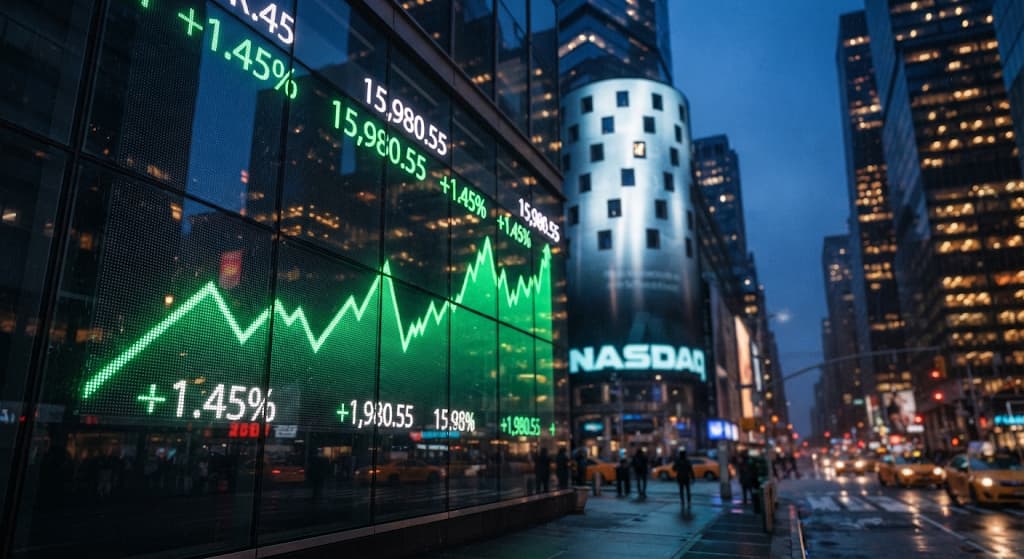
Coincheck’s path to Nasdaq wasn’t quick. The company first signaled IPO ambitions as early as 2022, targeting a 2023 listing that didn’t materialize on schedule. The deal finally closed in December 2025 through a SPAC merger with Thunder Bridge Capital Partners IV, valued at roughly $1.3 billion, with Coincheck Group N.V. — the Amsterdam-headquartered parent — beginning to trade under CNCK, and its warrants under CNCKW.
That listing puts Coincheck in genuinely rare company: alongside Coinbase, it’s one of only two primarily exchange-focused crypto companies trading as a pure-play business on Nasdaq, a list that’s otherwise dominated by exchanges that remain private (Kraken, Binance, OKX) or that went public through more conventional structures (Gemini, Bullish). Monex Group chairman and Coincheck’s executive chairman Oki Matsumoto framed the listing as built on a decade of "robust business foundation" in Japan paired with US capital markets access — a notably confident framing for a company whose foundational public moment was a half-billion-dollar theft.
What Coincheck Actually Offers Today
Day to day, Coincheck functions as one of Japan’s dominant retail crypto platforms — data from Sensor Tower has reportedly tracked it as the leading crypto app in the Japanese market across multiple recent years. It operates under full FSA licensing, a meaningfully stricter regulatory bar than the offshore registrations many smaller exchanges covered elsewhere in this series rely on, and offers standard spot trading across major cryptocurrencies alongside NFT and other product lines built out under Monex’s ownership.
Reading the Comeback Honestly
It would be easy to tell this story as a clean redemption arc, and there’s real substance behind it — full user reimbursement, genuine ownership change, nearly a decade without a repeat incident, and now public-market scrutiny that didn’t exist before. It’s also fair to note that the version of Coincheck trading on Nasdaq today bears only partial resemblance to the one that lost half a billion dollars in 2018: different ownership, different risk controls, different regulatory relationship with the FSA. The hack happened to an earlier, structurally weaker version of this company, and the market seems to be pricing it that way. As Wes Ibarra puts it when weighing a comeback story against the numbers behind it, "a reimbursement is a promise kept once; a decade without a repeat is the promise actually being tested." For an industry still sorting out which post-hack recoveries are real and which are just quiet before the next failure, Coincheck’s is one of the more thoroughly tested examples on record.
Related guides
 What Is Tongue Weight?The tongue weight is one of the most important limits to consider when towing…
 What Is GVWR? Everything You Need To KnowAll vehicles have something in common and it doesn't matter if you are driving…
 2005 Hyundai Tucson Towing CapacitiesThe 2005 Hyundai Tucson is a smaller SUV, so I didn't expect them to…
 2022 Ford Escape Towing Capacity (W/ Chart)The 2022 Ford Escape has definitely changed on the outside over the years, but…
 P2B Promises to List New Tokens in Three Days. That Speed Is the RiskP2B (formerly P2PB2B) markets itself on fast token listings. Here's how that pay-to-list model…
 2008 Toyota Highlander Towing CapacityThe 2008 Toyota Highlander is a popular SUV and most people use them for…