
Why Coinone Isn’t Available in the US (It’s Not About Your IP Address)

Most exchanges that block American users do it the simple way: check the IP, check the declared country of residence, deny the signup. Coinone’s restriction works differently, and understanding why reveals something genuinely distinctive about how South Korea regulates crypto trading — a system that makes "just use a VPN" far less useful advice than it would be almost anywhere else.
The Real-Name Verification Wall
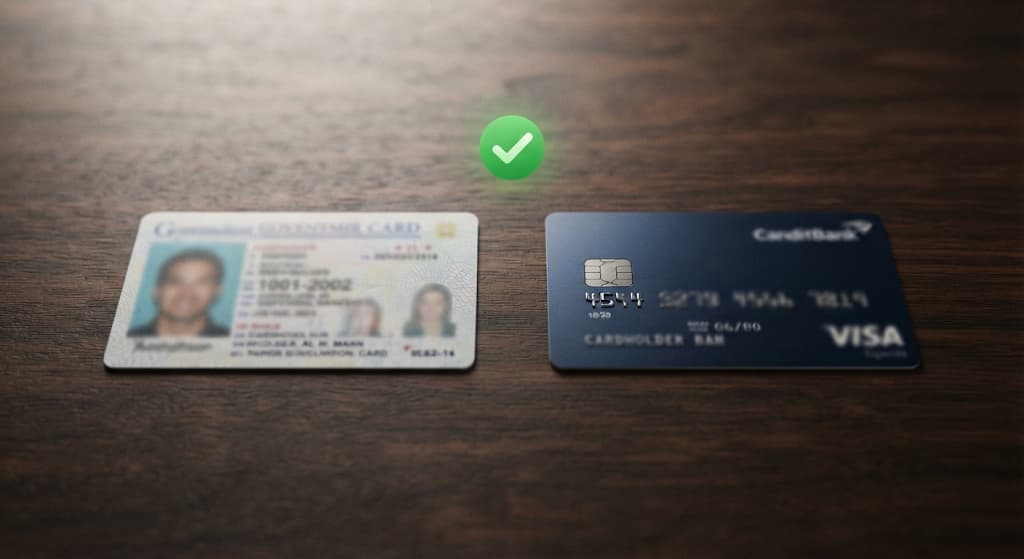
Since 2018, South Korean financial regulators have required licensed crypto exchanges to operate under a real-name verification system for any trading involving Korean won. In practice, that means a user can’t simply deposit cash and start trading — they need a Korean won bank account held at a domestic bank that’s formally partnered with the exchange, with the account holder’s name matching their exchange verification exactly. No matching Korean bank relationship, no KRW trading. It’s a system built specifically to prevent anonymous or third-party-funded accounts, implemented after a string of exchange-related fraud and money-laundering concerns earlier in the decade.
Coinone operates squarely inside that framework, which is the real reason "Coinone USA" isn’t a meaningful search result — it’s not that the exchange has chosen to geo-block American IP addresses as a policy decision the way Bybit or OKX’s global platform does. It’s that the entire account-funding mechanism assumes a Korean banking relationship that the overwhelming majority of US residents simply don’t have and can’t easily obtain. The restriction is structural, baked into how the exchange is required to operate domestically, rather than a preference Coinone could reverse by updating a terms-of-service document.
What Coinone Actually Is
Founded in 2014 and headquartered in Seoul, Coinone is one of South Korea’s longer-running exchanges, built around a proprietary trading engine it calls Coinone Core. The platform supports a few hundred tradable assets — figures across trackers range from roughly 200 to 250+ depending on the date checked — with both crypto-to-crypto and KRW-to-crypto markets. It’s spot-only; unlike Bithumb, Bybit, or most of the larger global exchanges covered elsewhere, Coinone doesn’t offer futures or margin trading at all, a deliberate scope limitation rather than an oversight.
Beyond basic trading, the platform runs Coinone Plus, its staking product, with advertised annual yields that vary by asset and market conditions — reported figures for Ethereum and Cosmos staking have ranged from roughly 3% to the mid-teens percent depending on the snapshot and promotional terms in effect at the time, so any specific number is worth checking live on the platform rather than trusting a cached figure.
What Trading on Coinone Actually Costs
This is one area where published sources genuinely disagree with each other more than usual, which is worth flagging rather than papering over. Depending on the source and date, Coinone’s standard spot fee is reported anywhere from 0.1% to 0.25%, with 0.2% appearing most consistently as the baseline flat rate before any discounts.
| Fee type | Reported range |
|---|---|
| Standard spot trade (maker/taker) | 0.2% flat, per most current sources |
| VIP tier (high monthly volume) | As low as 0% maker / 0.01% taker |
| Promotional fee voucher | Flat 0.04% for 30 days, renewable |
| Crypto deposits | Free |
| Crypto withdrawal (BTC) | Around 0.0015 BTC |
| KRW withdrawal | Flat fee, roughly 1,000 KRW |
That fee voucher system is a genuinely distinctive feature worth noting: Coinone lets users activate a temporary discounted rate with one click, no minimum volume required, dropping standard trading costs to a flat 0.04% for a renewable 30-day window — a far more accessible discount mechanism than the high-volume VIP tiers most competitors gate behind large monthly trading thresholds.
The Trust Signal Worth Weighing
Independent trackers have recorded Coinone’s Trustpilot score sitting notably low — around 2.1 out of 5 in recent snapshots — which puts it in territory similar to several other exchanges covered in this series rather than being an outlier red flag specific to Coinone. Low Trustpilot scores are common enough across the crypto exchange industry broadly, where review platforms tend to attract disproportionately negative feedback from users dealing with withdrawal delays or support friction, that the number alone isn’t damning on its own. It is, however, a reasonable prompt to read a sample of the actual complaints before assuming a highly-regulated Korean exchange is automatically lower-risk than a global competitor — regulatory compliance and smooth day-to-day customer service are related but genuinely separate things.
What This Actually Means If You’re Outside Korea
For the vast majority of readers outside South Korea, Coinone isn’t a realistic option regardless of interest — not because of a blanket policy ban, but because the exchange is built around a banking infrastructure requirement that doesn’t extend past Korean financial institutions. That’s a meaningfully different situation from an exchange like Bybit or OKX, which simply choose not to serve US residents as a matter of licensing and risk management while remaining structurally capable of doing so elsewhere. If you do hold Korean residency and banking access, Coinone functions as a legitimate, moderately priced domestic option with one standout convenience feature in its fee-voucher system — just without the futures markets or the broader coin selection that larger global platforms offer.
More exchange breakdowns like this one are collected on Wes Ibarra’s author page.
Related guides
 What Is Tongue Weight?The tongue weight is one of the most important limits to consider when towing…
 What Is GVWR? Everything You Need To KnowAll vehicles have something in common and it doesn't matter if you are driving…
 Dodge Ram Towing Guides (1500, 2500 & 3500)1500 Guides: 2020 Ram 1500 2020 Ram 1500 Classic 2019 Ram 1500 2019 Ram…
 2020-2011 Chevy Tahoe Towing CapacitiesThe Chevy Tahoe is a popular family SUV know for its ability to tote a…
 Jeep Cherokee Towing CapacitiesThe Jeep Cherokee is a smaller version of the Jeep Grand Cherokee but is…
 2022 Ford Escape Towing Capacity (W/ Chart)The 2022 Ford Escape has definitely changed on the outside over the years, but…